
.jpg)
The longevity movement has a new fixation: looking inside the body before anything goes wrong. A radiation-free whole-body MRI sits at the center of it.
The machine is wider than you expect. You lie back, a technician fits a set of coils across your torso, and a screen comes into view so you can watch something while the magnets go to work. Fifty minutes later (sometimes longer), it's over. No needle. No dye. No radiation. In that brief window the scan mapped the body you've lived in your whole life but have never fully seen.
For most of medicine's history, an MRI was something you earned by being sick. A symptom sent you to a doctor, the doctor sent you to imaging, and the imaging answered a specific question about a specific complaint. The scan now drawing crowds of healthy people inverts that order. It asks the question before there is a symptom at all.
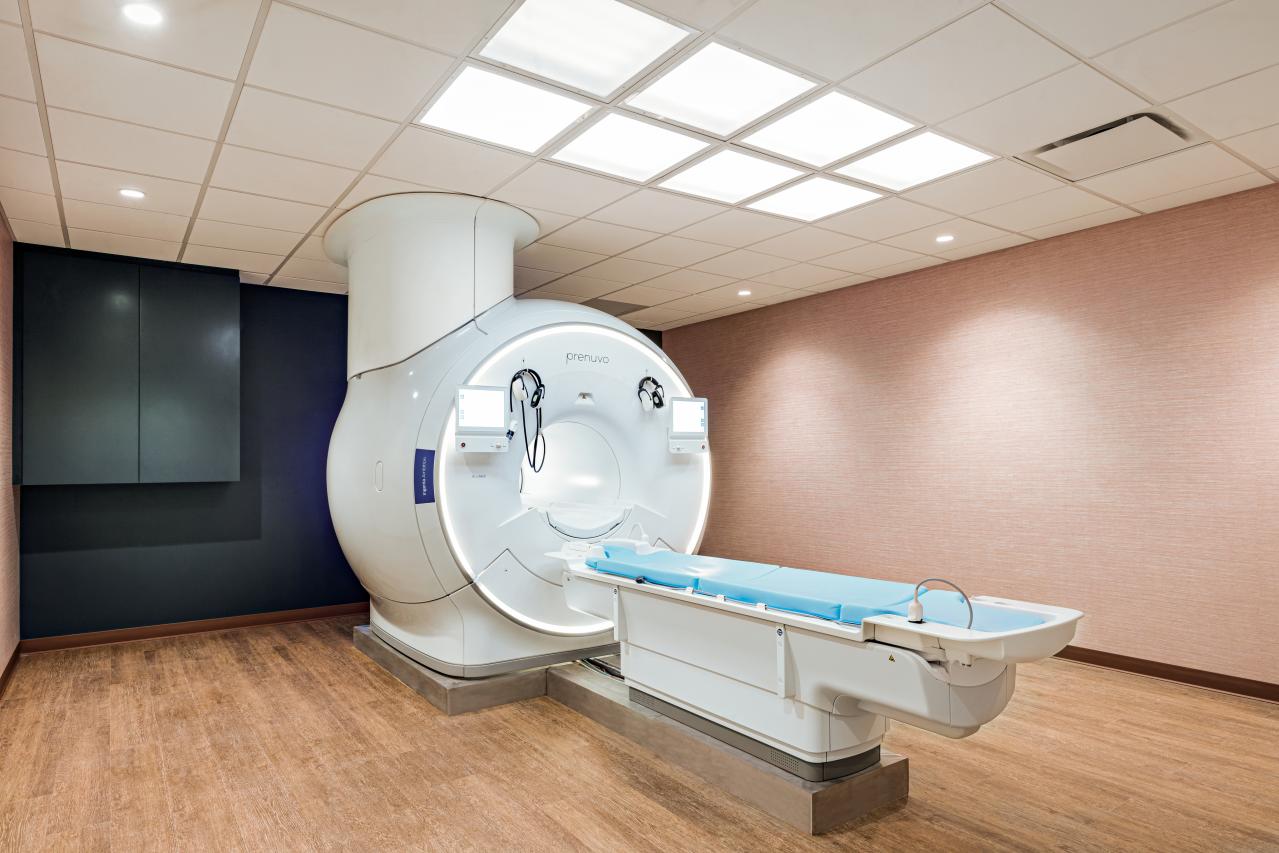
This is the logic of proactive health, the idea organizing a large part of the longevity world right now. The premise is simple and a little unsettling. Many of the conditions that shorten lives, certain cancers, aneurysms, fatty liver disease, early neurodegeneration, build quietly for years and announce themselves late, often too late to change the outcome. The annual physical, valuable as it is, mostly reads the surface. The proposition of whole-body imaging is that you can see the trouble forming while it is still small enough to act on.
Prenuvo has become one of the leading names attached to that proposition. The company was founded in 2018 by Andrew Lacy, a tech entrepreneur, and Dr. Raj Attariwala, a radiologist and nuclear medicine physician who holds a PhD in engineering. Attariwala built the scan himself. Beginning around 2011 at a clinic in Vancouver, he reworked standard MRI hardware and wrote custom software to do something the machines were not designed for: image the entire body at diagnostic quality in under an hour rather than the several hours a conventional approach would take. Dr. Dan Durand, the company's chief medical officer, now leads its medical group of more than 200 clinicians.

What makes the scan distinct is as much about what it leaves out as what it captures. It uses no ionizing radiation, the cumulative exposure that makes repeated CT scans a poor fit for routine screening. It uses no injected contrast dye. Those two absences are the whole point, because they mean the scan can be repeated year after year without the body paying a price for the surveillance. The technology itself is multiparametric, capturing different tissue properties across many image weightings, with heavy use of diffusion-weighted imaging, the sequence that tends to flag the dense, tightly packed cells characteristic of tumors. Prenuvo says a single session produces 1.3 billion data points and assesses up to 33 organs, and that it can identify some solid tumors as early as stage one. The whole-body scan covers head to mid-thigh and the major organ systems. It does not image the arms or feet.
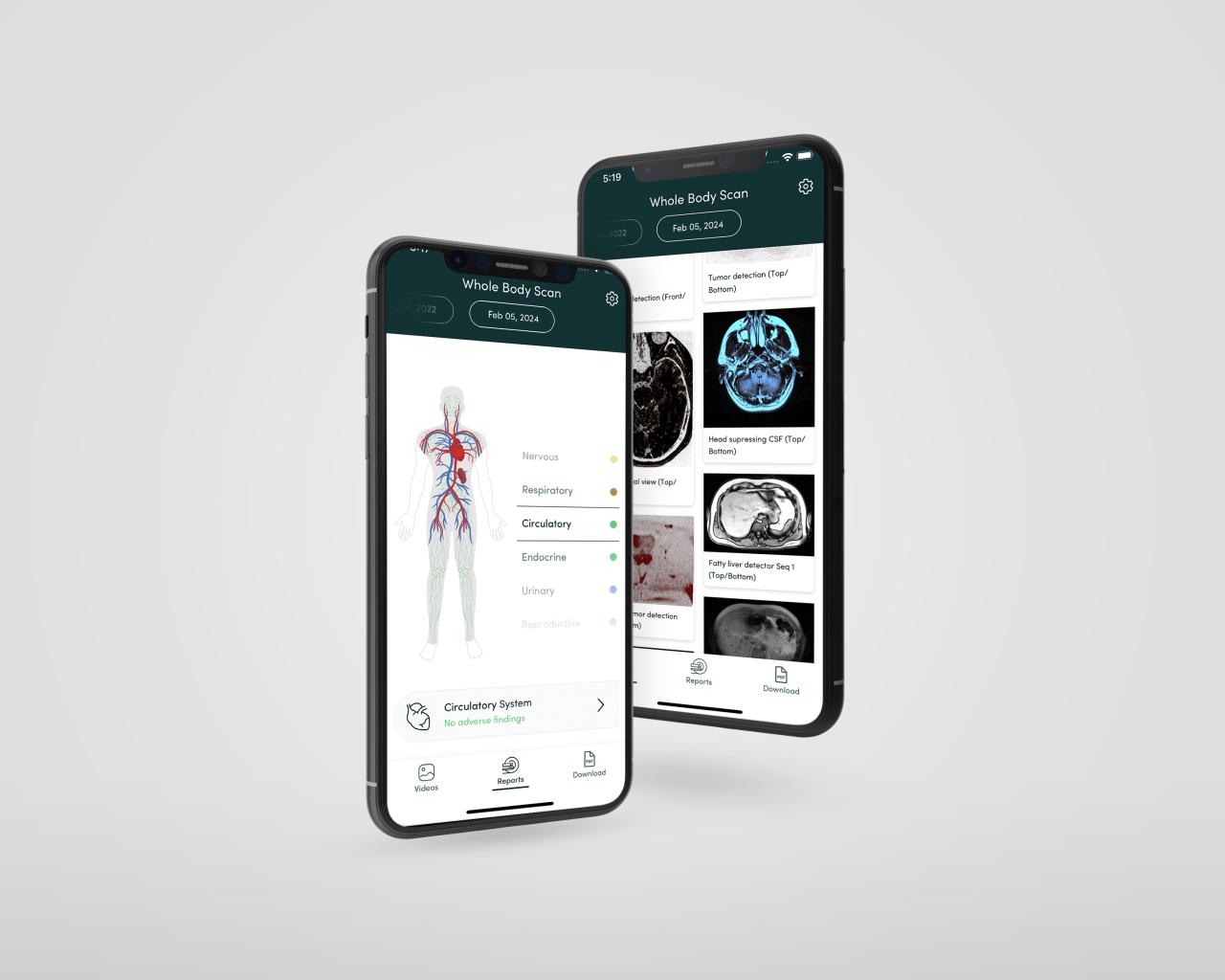
When the MRI report is ready it arrives in the company's app, written by a board-certified radiologist, with a nurse practitioner who walks you through the findings and flags what to raise with your own physician. The results read in plain language first, then in a clinical format meant to hand directly to a doctor.
The more telling shift came in March 2026, when Prenuvo moved from selling a scan to selling a membership. A standalone whole-body scan still runs $2,499. But the company now frames its real product as a yearly rhythm: imaging once a year, blood biomarker panels, and a clinician review, bundled into tiers. The Core membership is $1,199, the Comprehensive is $2,499, and the Executive runs $3,999, or $4,499 at the New York clinic. None of it is covered by insurance, though health spending accounts can be applied.
The membership tells you what the company actually believes the value is. A single scan is a photograph. The pitch is the time-lapse. A finding that holds steady across three years reads very differently from the same finding seen once, and a biomarker that drifts a little each year carries information a one-time blood draw cannot. The aim is a longitudinal record of one body over time, the kind of continuous baseline that conventional care, scattered across specialists and machines that never compare notes, almost never produces. That ambition, more than any single image, is what has made the scan a fixture of longevity culture. As of early 2026 the company reported more than 170,000 scans completed across 26 clinics in North America, Australia, and Europe.
It is worth being clear-eyed about where the evidence stands, because the science has not caught up to the enthusiasm. The American College of Radiology does not recommend whole-body MRI for people without symptoms, citing the absence of proof that it extends lives or justifies its cost. The sharpest concern is the false positive. A scan of a healthy person turns up something ambiguous, and the work of ruling it out can mean more imaging, biopsies, expense, and months of worry, sometimes over a finding that would never have caused harm. Prenuvo's own retrospective study of more than 1,000 patients, presented at a 2025 oncology conference, reported a roughly 50 percent positive biopsy rate and a 99.8 percent negative predictive value. Independent researchers note those figures come from the company rather than a randomized trial, and that the prospective study designed to settle the question is still years from results. Prenuvo positions the scan as an adjunct to standard screening, not a replacement. It does not stand in for a mammogram, a colonoscopy, or a Pap smear.
Held against that uncertainty is a real change in how people want to relate to their own health, and the change is not going away. The instinct to know, to establish a baseline while well rather than to assemble one in a panic later, is a reasonable response to a system most of us only meet once something has already gone wrong. A scan cannot promise a longer life. What it offers is information, and information is only ever as good as the judgment brought to it. The most useful way to approach a whole-body MRI is the same way you would approach any powerful tool. Understand what it sees, understand what it misses, and decide for yourself whether the picture is one you want.
.jpeg)
The facts
- What it is: A whole-body MRI screening with no radiation and no contrast dye, completed in under an hour.
- What it covers: Major organ systems from head to mid-thigh, including brain, spine, abdomen, and pelvis. It does not image the arms or feet, and it is not a substitute for mammograms, colonoscopies, or Pap smears.
- Cost (2026): Standalone whole-body scan $2,499. Annual memberships from $1,199 (Core) to $3,999 (Executive, $4,499 in New York). Not covered by insurance; HSA and FSA accepted.
- Where: 26 clinics across North America, Australia, and Europe, including Los Angeles, New York, Chicago, Miami, Scottsdale, Seattle, and San Diego.
- The caveat: Major radiology bodies do not currently recommend whole-body MRI for people without symptoms. The strongest outcomes data so far comes from the company's own retrospective research. Treat it as one input into a conversation with your physician, not a verdict.
Photography courtesy of Prenuvo.