
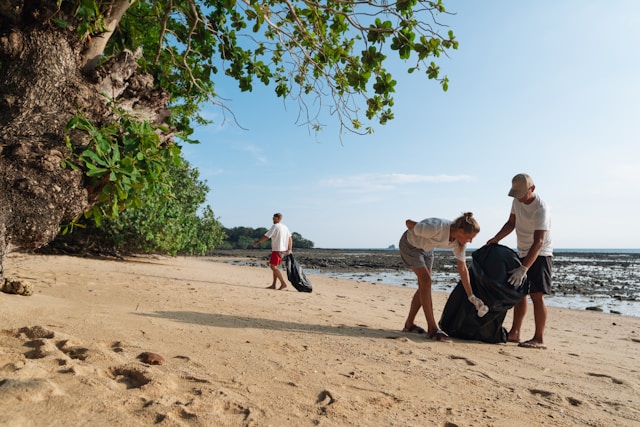
There are things we know extend healthy life: regular movement, adequate sleep, strong social connections, a sense of purpose. Volunteering, it turns out, touches nearly all of them at once. Which may explain why the research on its health effects is so consistently positive.
Studies across multiple countries and age groups have found that regular volunteering is associated with lower rates of depression, reduced risk of hypertension, slower cognitive decline, and in older adults, meaningfully lower mortality rates. The mechanisms are not fully understood, but the leading hypothesis is straightforward: volunteering activates the same neural reward pathways as other prosocial behaviors, while also providing the structure, social contact, and sense of contribution that predict wellbeing across cultures. You are doing something. You are doing it with people. It matters to someone other than you. That combination, it turns out, is medicine.
The dose matters less than the consistency. Two hours a week appears to be enough to produce measurable effects. The specific activity matters less than genuine engagement. Research suggests that going through the motions does not produce the same benefits as showing up to something you actually care about. This is not a minor caveat. It is the whole point. The body knows the difference between presence and performance.
Which raises the more interesting question: not whether volunteering is good for you, but what it says about us that we needed studies to confirm it. For most of human history, showing up for your community was not a wellness practice. It was just life. The survival of the group depended on it. The nervous system still seems to operate on that assumption. It rewards contribution. It flags isolation. It is, at a biological level, built for collective life in a way that modern schedules rarely accommodate.
San Diego makes this unusually easy. The city has a concentration of organizations doing work that is worth caring about: food security, ocean conservation, youth mentorship, neighborhood beautification, refugee resettlement. The range matters because caring about something specific is different from caring about volunteering in the abstract. One is a conviction. The other is a resolution. Resolutions fade. Convictions show up on Saturday morning.
The research does not require you to save the world. It requires two hours. Something real. Someone beside you. The good news is that in a city full of things worth caring about, finding that thing is mostly a matter of looking.